Brew a Café-Quality Flat White at Home: Mug, Milk & a Simple Heart Pour
Master silky milk, steady pouring, and a simple heart to brew a café-quality flat white at home—beautifully served in our Stoneware Coffee Mug.

Table of Contents10
- What makes a café-quality flat white at home?
- Meet your mug: why the Stoneware Coffee Mug matters
- Step-by-step: brew a flat white at home
- Espresso foundation: simple grind and flavor cues
- Milk texturing: silky, tight microfoam for flat whites
- How to pour a simple latte-art heart
- Practice routine: quick wins, troubleshooting, and next steps
- Set the scene: aroma, soundtrack, and serving
- Level up your skills with guided learning
- Wrap-up: your flat white, your ritual
If you want to brew a flat white at home, a few small habits make all the difference: consistent espresso, silky milk, and a calm, confident pour. In this guide, we’ll build your at-home ritual around the beautifully balanced Stoneware Coffee Mug and show you how to finish with an elegant latte-art heart.
What makes a café-quality flat white at home?
A great flat white combines balanced espresso with velvety microfoam and a gentle, centered pour. The result is a compact, creamy drink with a seamless texture.
While every kitchen is different, you can create a café feel by controlling a few basics and building a repeatable workflow. Think of it as your personal café ritual—simple, steady, and satisfying.
- Consistency over complexity: Keep the same cup, the same routine, and small, steady adjustments.
- Texture first: In a flat white, milk is the canvas. Aim for a smooth, glossy finish without big bubbles.
- Confident pour: A calm, centered stream helps you form a clean heart without fuss.
Pro tip: If you want structured practice on espresso, milk, and latte art, our barista-led Online Barista Course covers dialling in, texturing, and patterns from heart to rose.
Meet your mug: why the Stoneware Coffee Mug matters
The cup shapes your experience as much as the coffee. Our Stoneware Coffee Mug is a hand-glazed, 350 ml stoneware design with a comfortable handle and a pleasing, weighty feel.
Its size and shape support a flat white’s compact profile, giving you room to pour without losing heat too quickly. The speckled reactive glaze also frames your latte art beautifully.
- Capacity with control: 350 ml gives space to pour and swirl without over-dilution.
- Heat-holding stoneware: Helps maintain warmth from first sip to last.
- Comfort and balance: A weighty feel and steady handle support smoother pours.
Warm your mug before brewing. A preheated cup helps preserve crema and keeps microfoam glossy from first pour to final sip.
Step-by-step: brew a flat white at home
Think in a simple sequence: cup, espresso, milk, pour. Keep it calm and repeatable. You’ll be surprised how quickly your results feel café-level.
- Preheat the cup: Rinse your Stoneware Coffee Mug with hot water and set it ready on your bench.
- Prepare your espresso: Use fresh coffee and your usual espresso setting. Aim for an aromatic shot with a cohesive crema.
- Purge and ready the steam wand: Ensure a clean tip and a steady steam flow before you begin texturing.
- Texture the milk: Stretch briefly for a gentle rise in volume, then focus on rolling to create a fine, glossy microfoam.
- Polish the pitcher: Tap to settle, then swirl until the surface looks smooth and paint-like.
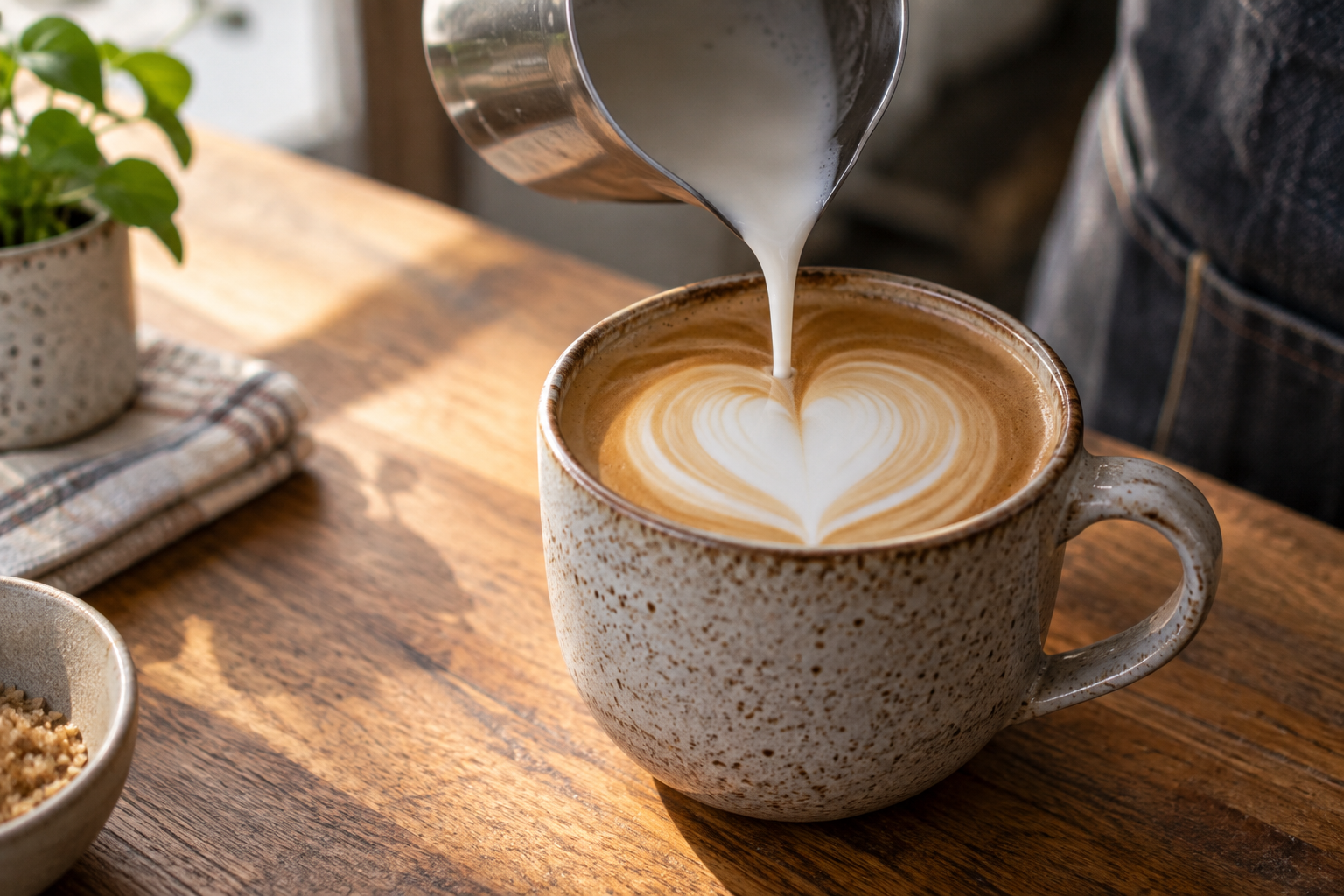
- Pour into the center: Start a thin stream to integrate, then lower and thicken the stream to lay down white foam.
- Draw the heart: When a white dot forms, lift slightly and pull through to finish the shape.
- Serve immediately: Sip while the milk is at its silkiest.
- Need deeper guidance? The Online Barista Course walks through milk texturing and latte art fundamentals step by step.
- Want to explore taste? Try our small-group Coffee Tasting Workshop for hands-on sensory practice.
Espresso foundation: simple grind and flavor cues
You don’t need complicated recipes to get started. Focus on freshly ground coffee, a tidy puck, and an extraction that looks steady and tastes balanced to you.
Let flavor guide your adjustments. If a cup tastes overly sharp or flat, make small changes next time and note what improves the balance.
- Aim for balance: Think rich aroma, cohesive crema, and a finish that feels smooth rather than harsh.
- Adjust in small steps: Change one thing at a time so you know what helped.
- Note-taking helps: A few lines about what you tried and how it tasted can accelerate consistency.
Consistency is your friend. Repeat what works, and tweak gently when it doesn’t—your taste will tell you where to go next.
Milk texturing: silky, tight microfoam for flat whites
Flat whites shine when the milk is silky and glossy, not airy. Think smooth paint rather than bubbly froth. This texture blends seamlessly with espresso and supports simple latte art.
If your milk looks dull or large bubbles form, reset and try again. Tapping to settle and swirling to polish can rescue the surface before you pour.
- Stretch lightly: Allow a gentle rise in volume—just enough to create a thin, even microfoam.
- Roll for texture: Keep the milk moving so bubbles incorporate and the surface becomes glossy.
- Pour soon after: Microfoam is at its best right away; swirling maintains that sheen.
Want hands-on structure? The Online Barista Course includes focused lessons on milk texturing and classic shapes—starting with the heart.
How to pour a simple latte-art heart
The heart is a friendly first pattern. Once your milk looks smooth and your espresso is waiting in the Stoneware Coffee Mug, you’re ready to pour.
- Start centered: Begin with a thin stream aimed at the middle to mix crema and milk.
- Lower and thicken: When the surface lightens, get closer and let a white circle bloom.
- Finish the heart: Lift slightly and pull a line through the circle to create a clean point.
- Keep it calm: A steady hand and relaxed pace make shapes cleaner than a fast pour.
- One motion: Aim for a continuous pour rather than stop-and-start movements.
Practice with water and a drop of soap in your pitcher to mimic microfoam flow—no coffee wasted while you rehearse the motion.
Practice routine: quick wins, troubleshooting, and next steps
Skill grows with small, regular practice. Keep sessions short, note what improved, and enjoy each cup in the moment.
Use simple cues to troubleshoot. If something feels off, adjust one variable next time and observe the change.
- Espresso tastes sharp? Try a slightly slower flow next session and compare.
- Milk looks airy? Focus on less stretching and more rolling.
- Hearts not forming? Pour closer to the surface once the cup has some volume.
Why does preheating the cup help?
A warm cup supports crema and helps keep microfoam glossy as you pour and sip, reinforcing a smooth mouthfeel from start to finish.
Can I practice art without wasting coffee?
Yes. Rehearse the pour with water and a touch of soap to simulate texture and flow before practicing on real milk and espresso.
How do I build confidence with milk?
Repeat short, focused sessions and watch guided breakdowns. The Online Barista Course offers structured lessons on technique and common patterns.
Set the scene: aroma, soundtrack, and serving
Part of brewing at home is creating a ritual that feels special. Add small, sensory touches that elevate the experience without adding complexity.
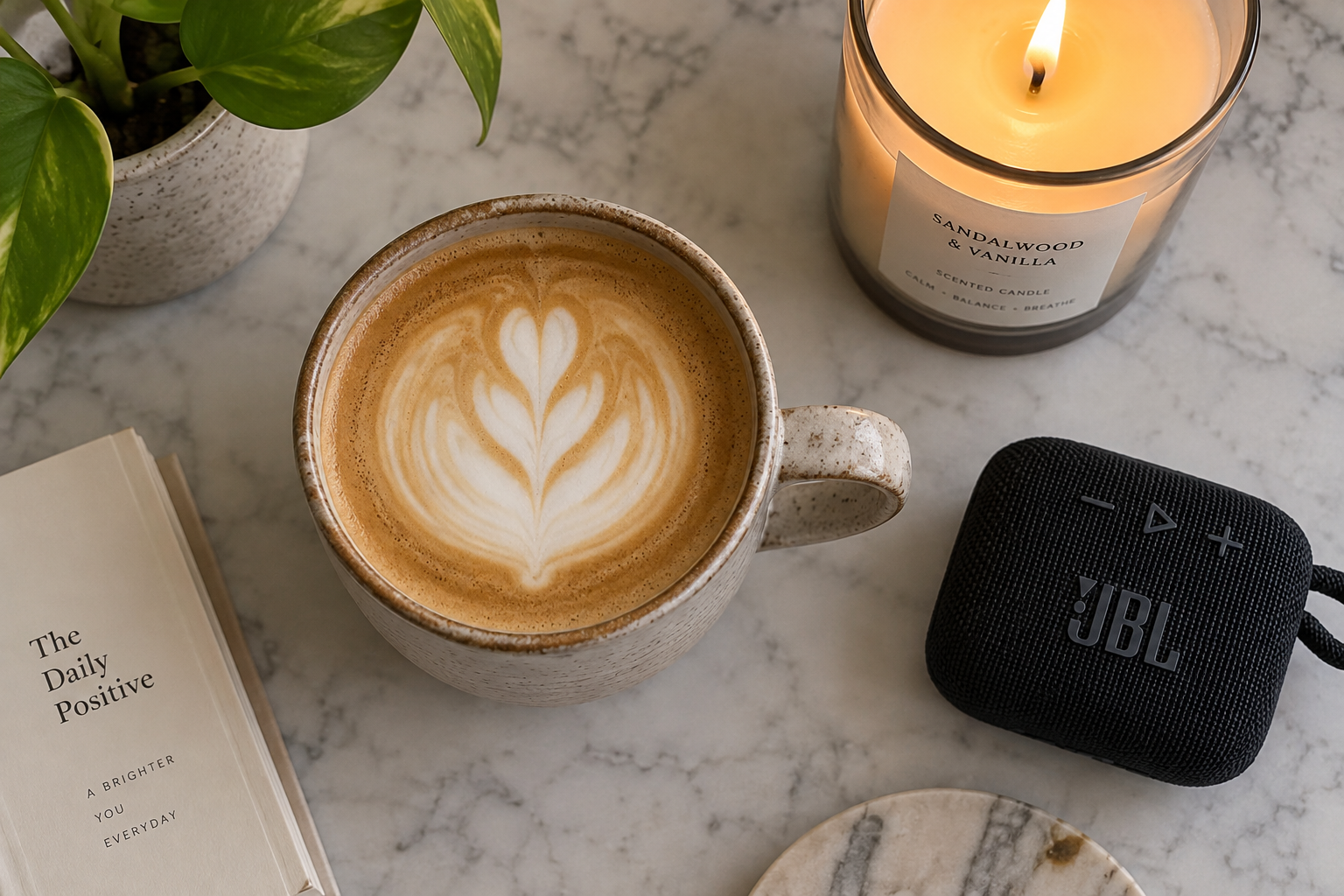
Light a soothing Hand-poured Scented Candle to frame your morning with calm, and queue a mellow playlist through the pocket-size Mini Bluetooth Speaker for a relaxed café vibe.
- Aroma matters: A gentle scent can make your first sip feel more immersive.
- Soundtrack your routine: Music encourages a steady rhythm while you steam and pour.
- Serve with intention: Use the same Stoneware Coffee Mug daily to reinforce consistency.
Level up your skills with guided learning
If you’d like a clearer roadmap, our barista-led Online Barista Course offers 2.5 hours of HD lessons on dialling in espresso, milk texturing, and latte art from heart to rose.
Prefer to train your palate? Join a small-group Coffee Tasting Workshop to taste six single-origin coffees, learn to cup like a pro, and compare brewing basics in good company.
- Structured video learning: Follow step-by-step lessons you can rewatch anytime.
- Hands-on tasting: Build sensory confidence with guided comparisons and discussion.
- Bring it together: Apply what you learn to your daily flat white ritual at home.
Wrap-up: your flat white, your ritual
With a warm Stoneware Coffee Mug, a smooth shot, silky milk, and a simple heart, you have everything you need to craft a café-quality flat white at home.
Ready to refine your technique? Explore the Online Barista Course, book a spot at our Coffee Tasting Workshop, and make your next cup the best one yet.
Tags
Related Articles
Expert articles, in-depth guides & fresh perspectives